
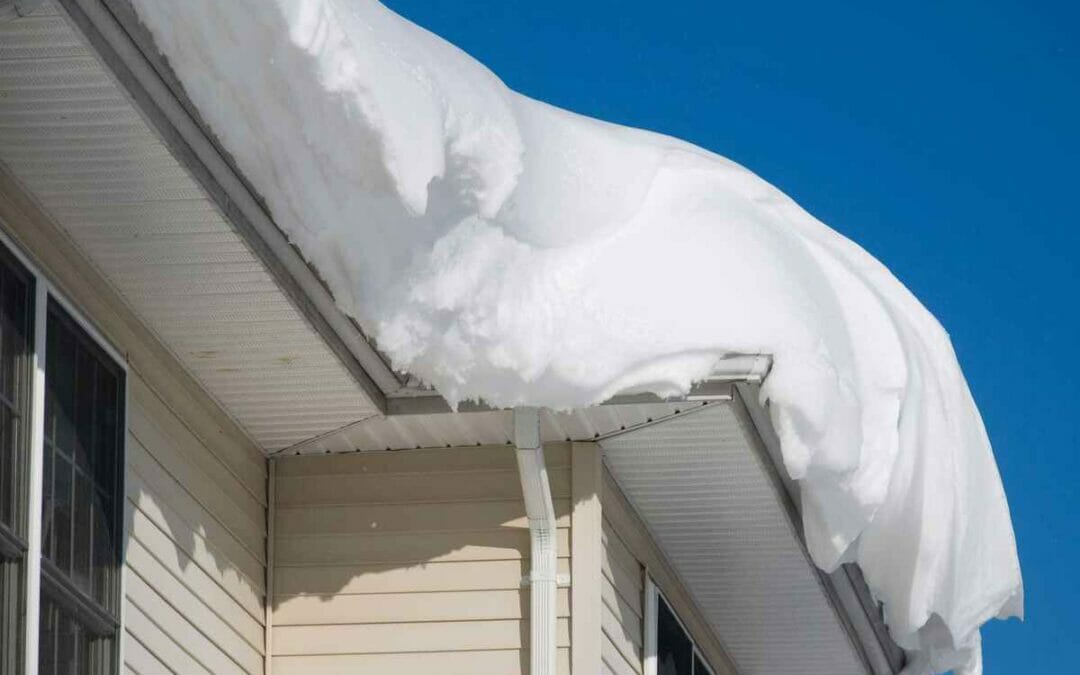
Short answer: stop the heat from reaching your roof. Ice dams form when warm air leaking from your house melts snow on the upper roof, and that water refreezes at the cold eaves. The most effective prevention, according to the University of Minnesota Extension, is to air-seal the ceiling between your living space and the attic first, then add insulation. Snow rakes and steaming deal with ice dams that have already formed; air sealing and insulation stop them from forming.
What causes ice dams
An ice dam needs two things: snow on the roof and uneven roof temperatures. When part of the roof is above freezing while the eaves stay below 32°F, snow melts up high, runs down and refreezes at the edge. The ridge of ice grows and traps more water behind it, which can back up under shingles and leak into walls and ceilings.
University of Minnesota Extension research found that in many homes, air leakage is the major way heat reaches the roof. Warm air escapes through gaps around light fixtures, attic hatches, plumbing and wiring holes, and chimneys.
How to prevent ice dams
- Air-seal the attic floor. Seal gaps around light fixtures, the attic hatch, plumbing stacks, wiring holes and chimneys. This is the step UMN Extension puts first.
- Add insulation. The Minnesota Department of Commerce recommends insulating attics to at least R-50 where space allows, and suggests R-60 for existing homes. Insulation works best after air sealing, not instead of it.
- Don’t count on extra vents alone. The Minnesota Department of Commerce warns that adding roof vents will not eliminate ice dams and often makes the problem worse, and UMN Extension does not recommend mechanical attic ventilation.
- Make sure your roof has an ice barrier. Minnesota code requires an ice barrier from the roof edge to at least 24 inches inside the exterior wall. It won’t stop an ice dam from forming, but it is the last line of defense against water backing up into your home.
How to remove an ice dam safely
- Use a roof rake carefully to pull snow off the lower part of the roof from the ground. Be gentle: UMN Extension notes a roof rake can damage roofing materials.
- Hire a professional who uses steam. The Minnesota Department of Commerce recommends professionals who work with steamers, which melt ice without harming shingles.
- Skip chippers, hammers, chemicals and open flame. The Minnesota Department of Commerce warns they can damage shingles, gutters and other parts of the house.
- Be cautious with heat cables. The Minnesota Department of Commerce says they can shorten the life of your roof.
When a new roof helps
If your roof is near the end of its life anyway, a replacement is the perfect time to fix ice dam problems for good: the crew can inspect the decking, install a full ice and water barrier at the eaves and valleys, and correct ventilation, while you have the attic air-sealed and insulated at the same time.
Frequently asked questions
Are ice dams covered by homeowners insurance?
Many policies cover interior water damage caused by ice dams, but coverage varies. Check your policy or ask your agent.
Will a metal roof prevent ice dams?
A metal roof sheds snow faster, which helps, but no roofing material alone stops ice dams. Air sealing and insulation address the cause.
How much attic insulation do I need in Minnesota?
The Minnesota Department of Commerce recommends at least R-50 where space allows, and suggests R-60 for existing homes, with air sealing done first.
Worried about ice dams this winter? Call (763) 333-7663 or schedule a free roof inspection.


